The Effect of Florida's UV Rays on Window Glass and Seals
The "Sunshine State" earns its name, but that same sunshine carries intense Ultraviolet (UV) radiation that is one of the primary causes of window failure in Florida.
Understanding UV Degradation
UV radiation is high-energy light that can break the molecular bonds in organic materials—a process known as photodegradation. In the context of your windows, this radiation targets the most vulnerable components: the seals, the gaskets, and any protective films or tints applied to the glass.
When window seals (usually made of rubber, silicone, or EPDM) are exposed to constant, intense Florida sun, they lose their elasticity. Over time, they become brittle, develop micro-cracks, and eventually shrink. This allows moisture and air to bypass the seal, leading to energy loss and the potential for mold growth inside your walls.
The "Sun-Baked" Window
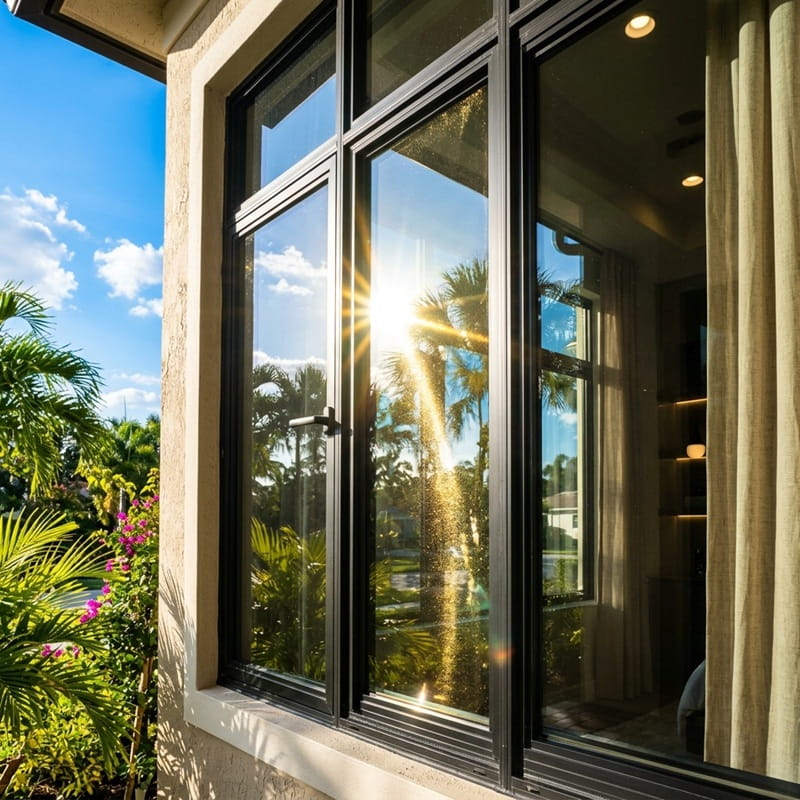
In Florida, south-facing windows can reach temperatures of over 140°F in the summer. This heat, combined with UV exposure, accelerates the aging process of your window units by up to 300% compared to northern climates. Regular cleaning removes the dirt that can trap even more heat against the glass.
UV Impact on Modern Glass Coatings
Many modern Florida homes use Low-E (Low Emissivity) glass, which has a microscopic metallic coating designed to reflect heat. While this coating is incredibly effective, it is also sensitive. If dirt and pollutants are allowed to sit on the glass and are "baked" in by UV rays, they can chemically react with the coating, causing permanent discoloration or "ghosting" that cannot be removed with cleaning.
Protecting Your Interior
Beyond the window itself, UV rays passing through dirty glass are actually more scattered and can cause more "hot spots" on your furniture, flooring, and artwork. Clean, clear glass allows your window's built-in UV protections to work as designed, reflecting the maximum amount of harmful radiation back outside and protecting your expensive interior investments.
Frequently Asked Questions
Can UV rays damage my window tint?
Yes, UV rays are the primary cause of tint bubbling, fading, and peeling. Regular cleaning with "tint-safe" professional products helps maintain the integrity of the film.
Does cleaning windows really help with UV protection?
Yes. Dirt on the glass can absorb heat and UV radiation, creating thermal stress on the window unit. A clean window stays cooler and allows the glass to expand and contract naturally without straining the seals.
Conclusion
Florida's sun is both a blessing and a challenge. By understanding the science of UV degradation and maintaining a regular cleaning schedule, you can significantly extend the life of your windows and protect the beauty of your home's interior. Let us help you keep your home protected and your views crystal clear.